
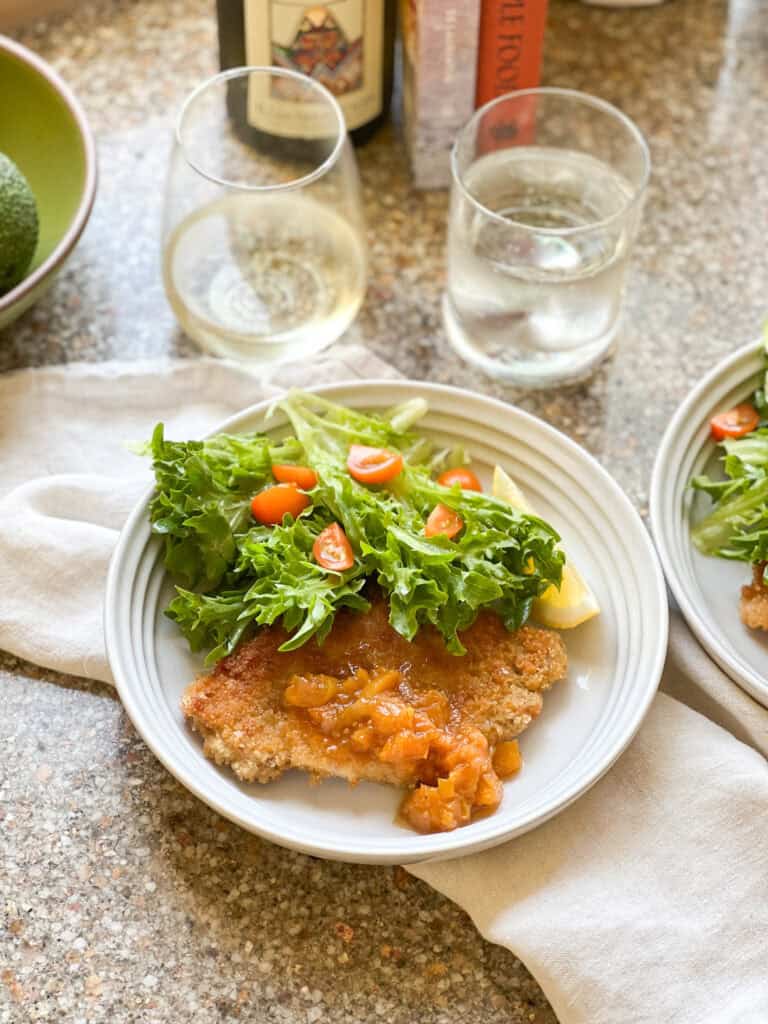
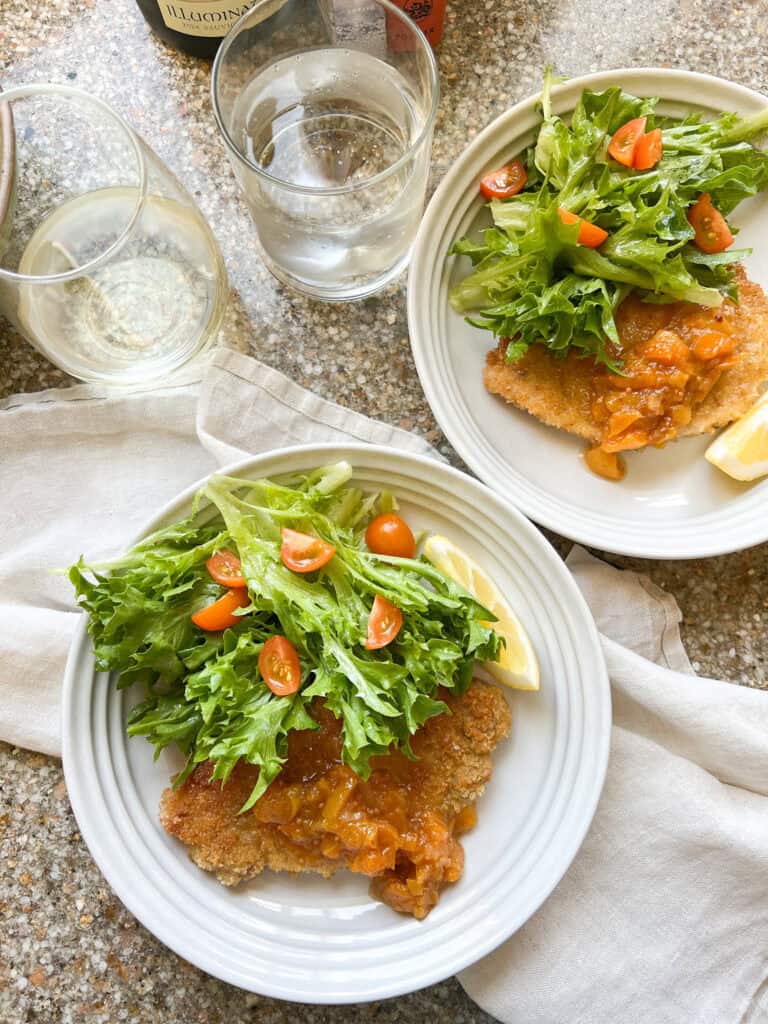
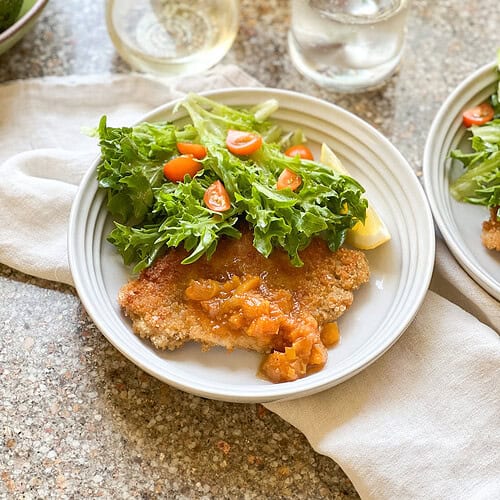
These Shallow Fried Thin Pork Cutlets with Apricot Mostarda is a recipe worth keeping in your back pocket for an easy and elegant weeknight dinner that is ready in 30 minutes. Boneless pork chops are pounded to a half inch thick and dredged in a seasoned flour mixture and breadcrumbs before shallow fried to golden brown and crispy goodness. This is an easy pork cutlet recipe that you'll love for easy weeknights.
Recipe at a Glance
| Prep Time | 10 Minutes |
| Cook Time | 20 Minutes |
| Total Time | 30 Minutes |
| Servings | 4 |
| Difficulty Level | Easy |
| Cuisine Type | Italian-Inspired |
| Best For | Easy Weeknight Dinners, Family Friendly, Pantry Staples, Low Budget Cooking, Summer Recipes |
| Main Ingredients | Pork loin, breadcrumbs, all-purpose flour, seasonings, apricots, vinegar, honey, dijon mustard |
| Farmers Market Friendly | Yes |
Why You'll Love This Recipe
You'll appreciate easy dinners like this for an easy way to cook thin-cut chops in minutes. These breaded pork cutlets are golden, crispy, and ready in just 30 minutes. We add depth of flavor to our flour coating and season our breadcrumbs with a bit of parmesan cheese. The apricot mostarda is a seasonal summer sauce made from stone fruit that is also adaptable to peaches for a late summer rendition of a tangy sauce that compliments the thin sliced pork chops that are shallow fried to their golden brown and delicious texture. You'll also love that this recipe is:
- Crafted from simple pantry ingredients
- Easily adapted for chicken, steak, or even veal
- A perfect pairing for seasonal sauces and vegetables making this a year-round recipe staple to have on hand
- Elegant enough for easy entertaining yet simple enough for a random Tuesday night dinner at home
What is Pork Milanese?
The name Milanese refers to the Northern Italian dish technique, originating in Milan, where thin cutlets of meat, pork, or poultry are breaded and pan-fried until crispy and golden. Traditionally, the dish is made with veal. Today, you'll find equally delicious variations made with chicken, turkey, beef, or pork.
The hallmark of Milanese isn't in the protein we use but, rather, it's in the technique. Thin cutlets cook quickly while the breadcrumb coating crafts a delicate, crisp crust that compliments the tender and juicy meat inside.
I love the versatility of dish like this through the seasons. In summer, I'm serving it alongside a simple salad dressed in olive oil and lemon with summer tomatoes and topped with a tangy mostarda from apricots or peaches. In winter, I may top this with braised winter greens with a squeeze of lemon. Seasonal accompaniments will elevate this dish throughout the year.
Ingredients We Need for This Recipe
Boneless Pork Chops
Choose boneless pork loin chops or pork sirloin chops over bone-in pork chops here. Boneless is the best here to ensure even cooking and ease in dredging. You'll want to make sure that the cutlets are about ½ inch thick. If picking up at your local butcher, ask if they can already pound them down to the ½ inch thickness.
Breadcrumbs
Finer breadcrumbs work better here at crafting the crispy golden crust compared to panko. I like to make homemade breadcrumbs by taking leftover sourdough and removing the outer crust, then dicing the bread into small cubes. Next, I’ll add the cubes to the base of my food processor and pulse until they are ground fine. I’ll then preheat oven to 350 degrees Fahrenheit and toast the breadcrumbs about 7 to 10 minutes, stirring halfway through, until they’ve dried out and begun to turn slightly golden. I then remove them from the oven to cool completely before storing in an airtight container. They’ll last a couple couple months for the variety of recipes in which I use them.
Eggs and Flour
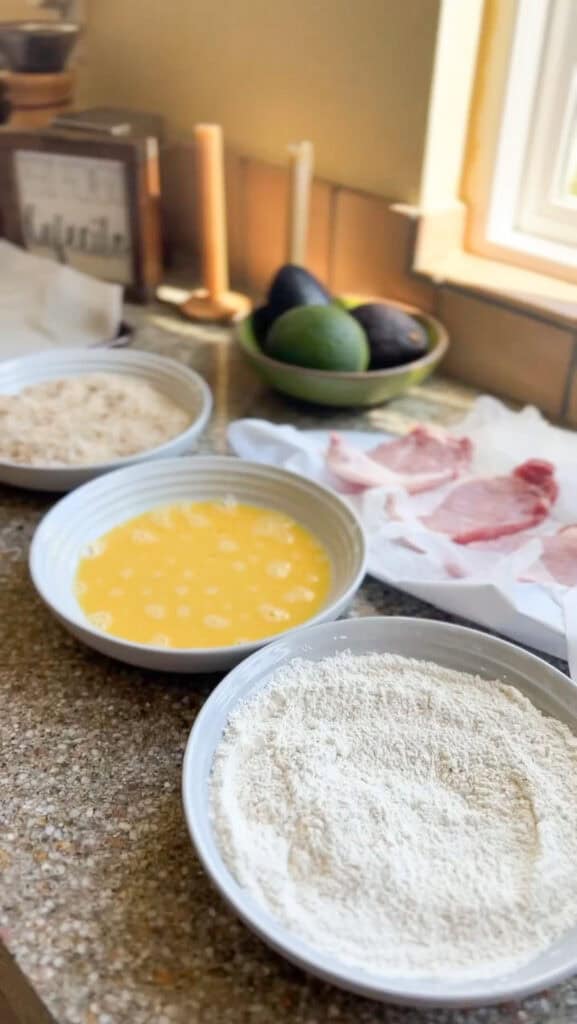
We're creating three stations for our dredging, or coating our thin pork chops prior to frying them in a large skillet. The all-purpose flour is our first dredging step to coat and season our pork loin cutlets. The eggs act as the intermediary binder between the flour coating and the breadcrumb coating.
Mostarda Ingredients
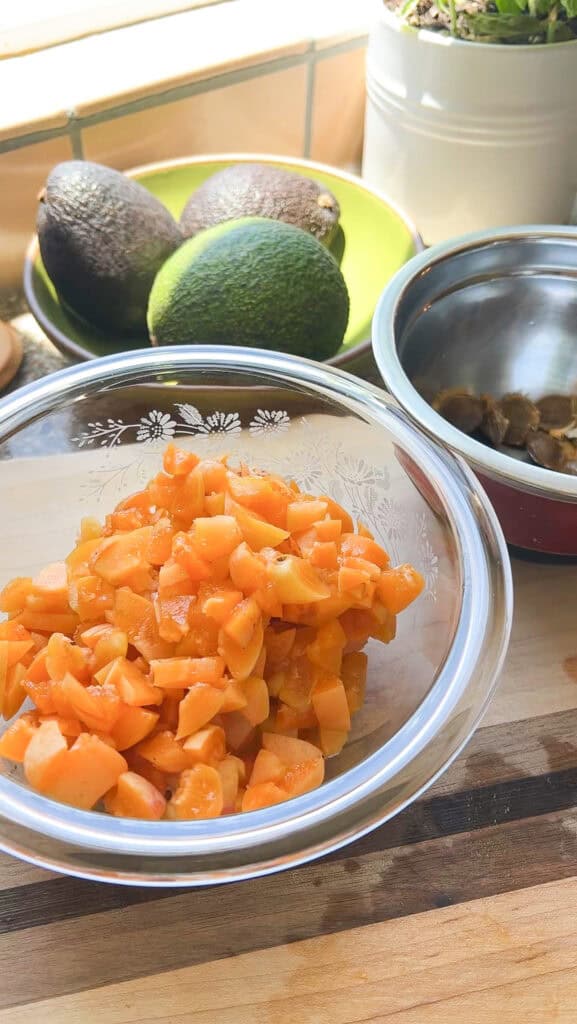
We are crafting one of my favorite sauce options using the Blenheim Apricots from our Riverdog Farm CSA box. A mostarda is a Northern Italian condiment made from fresh fruits in a sweet and acidic mustard sauce. Scroll down to the recipe card for the sauce ingredients and also check out the seasonal sauce ideas further down in this post.
How to Prepare this Pork Milanese with Apricot Mostarda
We will begin with prepping the mostarda. This will allow us time to let it come to room temperature and for the flavors to meld together prior to serving the fried cutlets.
Preparing the Mostarda
To begin making the mostarda, heat olive oil in a small saucepan over medium heat. Add the shallot and kosher salt. Cook for about 2 minutes, allowing shallots to soften. Stir in mustard seeds and the Aleppo pepper flakes, allowing their aromas to release, about 1 minute. Pour in vinegar and add the honey. Bring mixture to a simmer to thicken slightly for 3 minutes.
Add the mustard and the apricots. Bring to a simmer and cook, stirring often, about approximately 10 minutes. You want the mixture to thicken and the apricots to begin to break down and soften to a near jam-like consistency. Remove from heat and allow to cool to room temperature, covered. Transfer mostarda to an airtight container and store in the refrigerator for up to 2 weeks. This apricot mostarda can also be stored in the freeze for up to 6 months.
Preparing the Thin Pork Cutlets for Frying
Set up the dredging and seasoning stations by setting 3 shallow bowls or plates in order. In shallow bowl 1, whisk together the flour, salt, ground black pepper, and Tutto porchetta seasoning. If you don't have the Tutto porchetta seasoning, you can use a mix of garlic powder, onion powder, paprika, and dried herbs de Provence. In shallow bowl 2, whisk together the eggs and dash of hot sauce. In shallow bowl 3, mix together the breadcrumbs and grated parmesan.
Pat cutlets dry with an unbleached paper towel. Dredge cutlet in the flour mixture first, shaking off the excess flour. Promptly dip the cutlet in the egg mixture to coat. Remove, allowing excess egg to drip back into bowl. Dip cutlet into the breadcrumb mixture ensuring it’s evenly coated in the bread crumbs. Gently shake off excess then place the prepared cutlet on a rimmed baking sheet lined with parchment paper. Repeat with remaining cutlets.
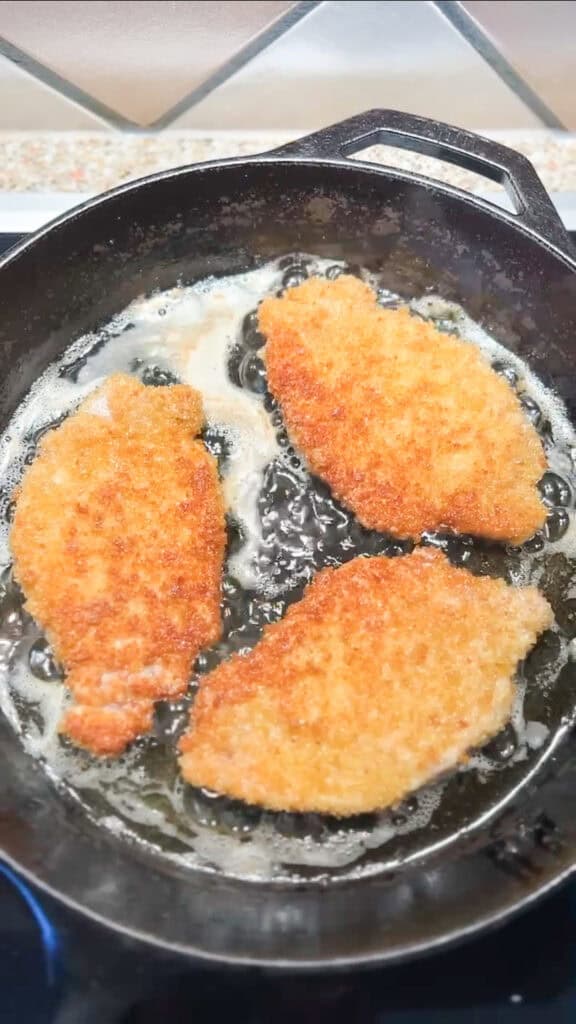
Heat olive oil in a large cast iron skillet over medium heat. Once heated, add cutlets to begin shallow fry. Fry cutlets for about 3 minutes on each side, flipping once, for a total cook time of 5-6 minutes. Fry until golden brown and crispy. Remove from pan and drain on paper towel lined plate prior to serving. The internal temperature should read 160 degrees Fahrenheit.
Notes on Shallow Frying
As the name implies, shallow-frying requires more cooking fat than regular pan-frying or sautéing but not as much as deep frying. I tend to prefer this method over deep frying as it requires less oil but we still get that crispy, golden crust on a cutlet that is absolutely delicious and easy to pull off on a given weeknight. It's one of my favorite ways to elevate a weeknight dinner.
Most shallow-fried foods are dredged, or coated, in a sequential series of flour, egg, and breadcrumbs. This coating turns golden brown during the shallow-fry and yields a juicy, crispy dish that retains moisture and flavor. I particularly enjoy this method for chicken cutlets, pork cutlets, fish such as sole, and even veggies like zucchini.
We aim to create a light, even, and unbroken coating for our dish. A mise en place set up is super helpful here. First, we set up our three-part dredging station. I like to use shallow pasta bowls for this set up. In the first bowl, we whisk together the flour and seasonings. For the second bowl, whisk the eggs and hot sauce. And with the third bowl, we’ll mix together the breadcrumbs and grated parmesan. The grated parmesan mixed with breadcrumbs gives it great flavor and melts easily to help create that golden, crispy crust.
Seasonal Sauce and Topping Ideas
One of the reasons I return to this recipe all year long is how easily it can change with the seasons. Rather than serving Pork Milanese the same way each time, I can use what's growing in the garden and what I'm finding either at the Napa Farmers Market or in our weekly CSA box. Below are a few topping suggestions based on the season's offerings.
Summer
Summer is all about the bright, juicy fruits and fresh herbs. Try serving these thin pork cutlets with:
- Apricot or Peach Mostarda
- Fresh Peach Salsa
- Grilled Corn Salsa
- Basil Pesto
- Cherry Tomato Salad
- Arugula tossed in a quick lemon vinaigrette
Fall
As we start to see the first fall figs, apples, and squash, we can create richer flavors that offer home cooked comfort once the cooler temperatures hit. I like to serve these fried pork cutlets with:
- Fig and Balsamic Mostarda
- Brown Butter and Crispy Sage
- Apple Fennel Slaw
- Roasted Delicata Squash or other Autumnal Squash
Winter
In California, bright winter citrus compliments the fried cutlets in the best way. Serve these fried boneless pork cutlets alongside:
- Meyer Lemon Gremolata
- Olive Tapenade
- Citrus and Shaved Fennel Salad
- Roasted Broccoli and Garlic Confit
- Homemade Tomato Sauce from Freezer Tomatoes
Spring
Celebrate the first tender vegetables of the season! I love pairing these crispy fried boneless chops with:
- Shaved Asparagus and Lemon
- Herby Salsa Verde
- A Spring Salad of Pea Shoots and English Peas
- Shaved Radishes and Greens
Shallow Fried Thin Pork Cutlets with Apricot Mostarda

Equipment
- 1 3 quart sauce pan
Ingredients
For the Apricot Mostarda
- 2 cups diced apricots from approximately 14 apricots
- 1 tablespoon olive oil
- ¼ cup shallots finely chopped
- 1 teaspoon mustard seeds
- ½ teaspoon Aleppo pepper flakes
- ½ cup white wine vinegar
- ⅓ cup honey
- 1 teaspoon dijon mustard
- ¼ teaspoon kosher salt
For the Pork Milanese
- 1 pound boneless pork loin sliced into 4 cutlets that are pounded thin to ½ inch thick
- 1 cup breadcrumbs
- ½ cup grated parmesan
- ¼ cup olive oil
- 2 eggs
- Dash of hot sauce
- ¼ teaspoon ground black pepper
- ¾ cup all-purpose flour
- 1 teaspoon kosher salt
- 1 teaspoon Tutto Porchetta seasoning
Instructions
Preparing the Apricot Mostarda
- Heat olive oil in a small saucepan over medium heat. Add the shallot and kosher salt. Cook for about 2 minutes, allowing shallots to soften. Stir in mustard seeds and the Aleppo pepper flakes, allowing their aromas to release, about 1 minute. Pour in vinegar and add the honey. Bring mixture to a simmer to thicken slightly for 3 minutes.
- Add the mustard and the apricots. Bring to a simmer and cook, stirring often, about approximately 10 minutes. You want the mixture to thicken and the apricots to begin to break down and soften to a near jam-like consistency. Remove from heat and allow to cool to room temperature, covered. Transfer mostarda to an airtight container and store in the refrigerator for up to 2 weeks. This apricot mostarda can also be stored in the freeze for up to 6 months.
Preparing the Pork Milanese
- Set up the dredging and seasoning stations by setting 3 shallow bowls or plates in order. In shallow bowl 1, whisk together the flour, salt, pepper, and Tutto porchetta seasoning. In shallow bowl 2, whisk together the eggs and dash of hot sauce. In shallow bowl 3, mix together the breadcrumbs and grated parmesan.
- Pat cutlets dry with an unbleached paper towel. Dredge cutlet in the flour mixture first, shaking off the excess. Promptly dip the cutlet in the egg mixture to coat. Remove, allowing excess egg to drip back into bowl. Dip cutlet into the breadcrumb mixture ensuring it’s evenly coated in the breadcrumbs. Gently shake off excess then place the prepared cutlet on a rimmed baking sheet lined with parchment paper. Repeat with remaining cutlets.
- Heat olive oil in a large cast iron skillet over medium heat. Once heated, add cutlets to begin shallow fry. Fry cutlets for about 3 minutes on each side, flipping once. Fry until golden brown and crispy. Remove from pan and drain on paper towel lined plate prior to serving.

Leave a Reply