
Today, we're talking with Farmer Aurora from Schul Farmstead! We're learning how no-till and regenerative farm practices help Aurora in thoughtfully growing all she sells at her local farmers market and as a part of her CSA in western New York.
I hope you are enjoying this new series on Cooking with Our CSA titled "Farm Feature Friday!" The goal: highlight the small, independent, and family run farms that grow the food that nourishes our communities. Check back here to see all the farms featured.
Scroll down to read more about how Schul Farmstead got its start! You'll appreciate seeing the thought and care Aurora puts into growing the very food that nourishes her community.

Getting to Know the Farm
How did the Schul Farmstead begin? What inspired you to pursue farming?
I started farming in 2021 on my family’s former dairy farm and was honestly very burnt out and jaded from my career. I wasn’t getting any offers from the other jobs I was applying for and I knew I wanted and needed something different. My dad floated the idea of starting a vegetable farm together – an idea that I took and sprinted away with. For two years I worked in my job and farmed in the margin before going all in. I was inspired to pursue farming because I was already very interested in organic farming and growing practices (I shopped at the local co-op and was a CSA member), protecting the environment, and growing food for a local community.
What are the main crops you grow and why did you choose them?
Vegetables are the main crop on my farm. I chose vegetables because I wanted to grow food for my community and since they are an annual crop (planted every year), it was an easier entry into farming than, say, fruit trees which take years before they can be harvested.
How has your farm evolved over the years?
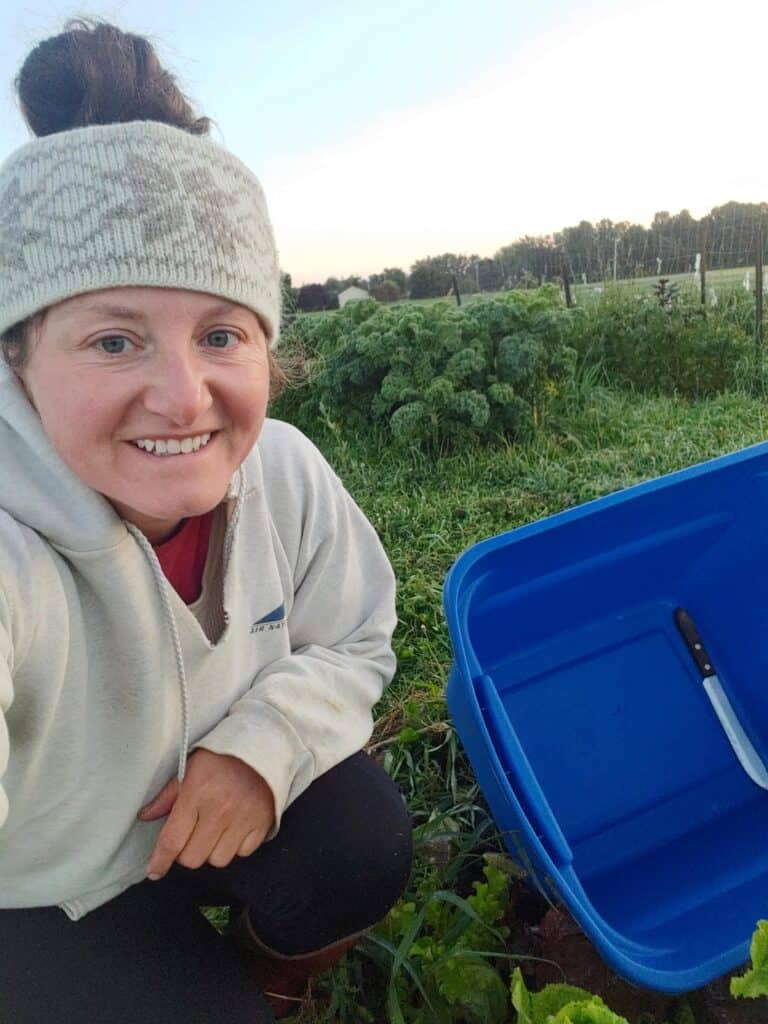
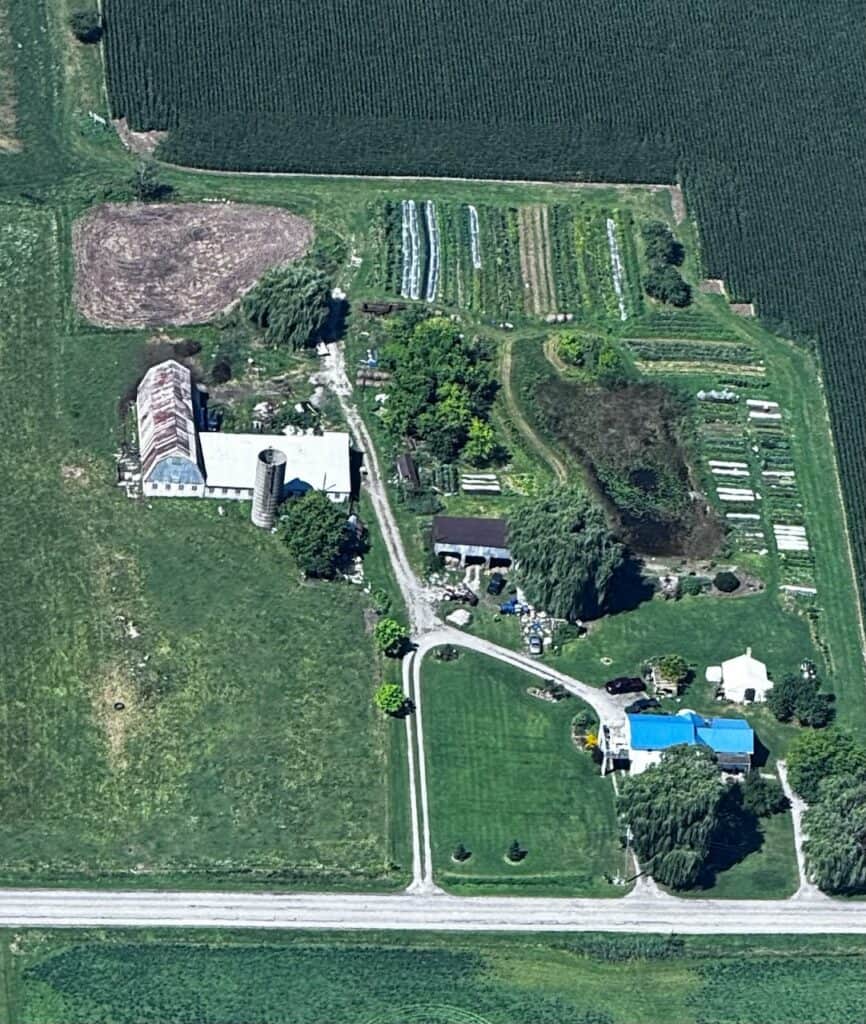
My farm has evolved significantly since I started in 2021. I went from growing on one-tenth of an acre to now close to 1.5 acres. When I first started I was only growing vegetables and some herbs. Now the farm has vegetables, perennial and annual herbs. I also grow microgreens, flowers for fresh and dried bouquets, berries, fruit and nut trees.
Farming Practices & Sustainability at Schul Farmstead
What farming methods do you use and how do they support soil health and sustainability?
Overall, the farming methods I use on the farm are regenerative agriculture practices. My farm operates as a no-till/low till farm. Rather than turning over the first 6-10 inches of soil before planting every spring, with our minimal tillage I only work over the first 1-3 inches of the soil on beds that I’m planting. This minimal disturbance keeps the soil structure intact. It also supports its microbes and nutrients. In turn this method of minimal, or no-tillage, sequesters carbon, rather than releasing it, which is common in conventional farming. The release of carbon into the atmosphere from soil tillage is a significant contributor to climate change.
By minimally tilling, I support a soil that is better able to absorb rainwater and increase irrigation efficiency. Less soil, and its nutrients, are washed away during large rain events, which grows more nutrient-dense vegetables. The soil microbiome remains healthy, the microorganisms, fungi, and bacteria feed off organic matter, and helps to suppress plant diseases. Throughout the entire year you can expect to see our growing areas covered. In fall I sow cover crops, like oats and winter peas, that are killed by frosts and left to decompose under the winter snow and the warmth of the early spring. Beds without cover crops are covered in hay or shredded leaves to protect the soil from eroding. Both methods provide food and protection for soil microbes.
What challenges do you face with weather, pests, or soil conditions? How do you manage them at Schul Farmstead?
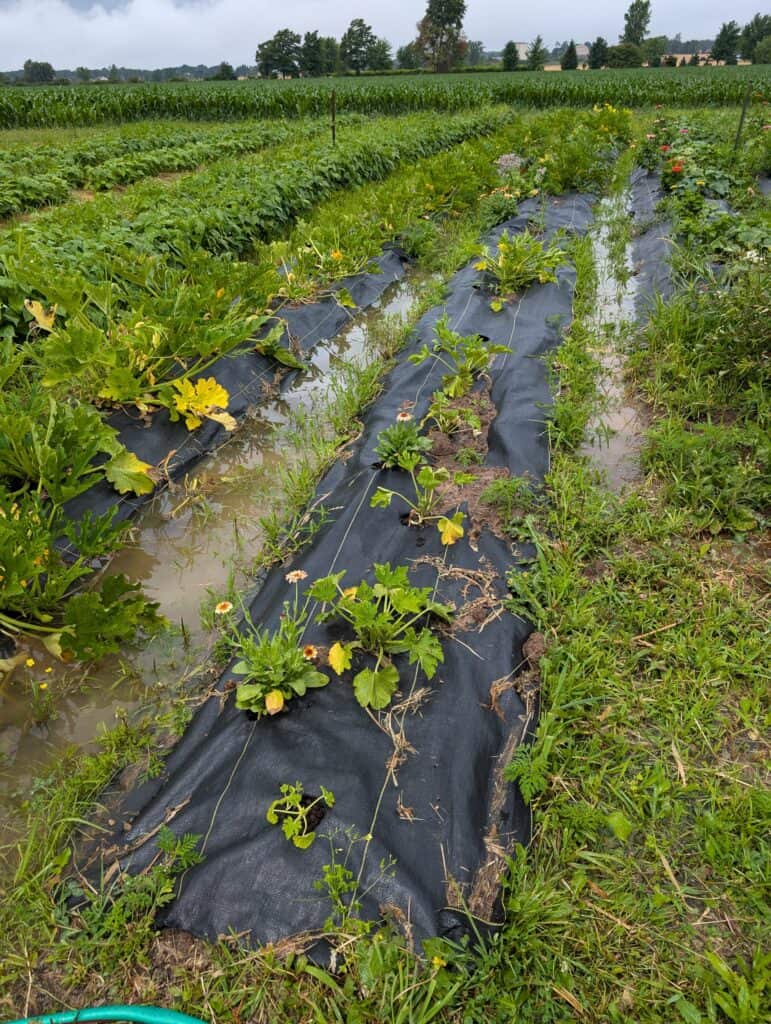
Weather-wise the biggest challenge, aside from our growing zone of 6, has been massive July rainstorms that drop 1-5” of rain in a few hours or over the course of a few days. To mitigate this we’ve built permanent raised beds in all of our growing fields so that the soil line is 3”+ inches above the walkways and they drain better during a rainstorm. This prevents root rot that can set in and kill most of the vegetables if their roots are exposed to soaking water for too long.
Another reason we have the no-till permanent beds is because of our soils. Our soils are heavy and contain a significant amount of clay - which means they take longer to dry out in the spring in order to be planted into. By having them beds be raised and only needing to work the first 1-2” inches of the soil, they are ready more quickly in the springtime to be planted into. If we tilled, we wouldn’t be able to get into the beds to plant until mid to late May - which would set some of our cooler season crops back by about 4 weeks.
Pests – our biggest pests are cabbage worms/moths & cucumber beetles. We also have a lot of flea beetles in the spring, but I do little to mitigate them since their damage is purely cosmetic on the brassica crops like kale and arugula. To manage the cabbage worms I check the brassica plants about 2x a week to squish eggs or the worms themselves. I also cover some of the plants with white row cover when they are transplanted to help them just be less susceptible to damage when they are tender seedlings. Cucumber beetles are dealt with similarly, and then I also plant multiple rounds of cucumbers and zucchini since I know the plants will eventually succumb to the bacterium wilt that the beetles spread.
Seasonality & Local Impact
What are your busiest times of the year and how do the seasons inform or influence what you grow?
The busiest time of the year is our growing season, which runs from April to October, mainly. March, April, and May are the times when I am getting beds prepped and planted into - so lots of caring for seedlings, hauling compost, transplanting or seeding crops, and starting to weed. June, July, and August are heavy harvesting months and also are months where I am replanting or reseeding crops – like our lettuce, which I seed a few beds of about every 7-10 days from end of April to end of September. This is when weeds can become a big problem since it’s hot and there is plenty of water - so weeding is a priority. This is also when I transplant and seed many of the fall crops and some cover crops. Our garlic and storage onion crops are harvested then too and cured for a few weeks. September, October, November is a combination of direct seeding crops, harvesting, and preparing beds for the winter/next spring with compost and cover crops.
Since I farm in zone 6, the seasons totally dictate the rhythm of the farm. Here's a cadence of the year by the seasons:
- January to March: I'll do admin type projects or projects that can be done indoors.
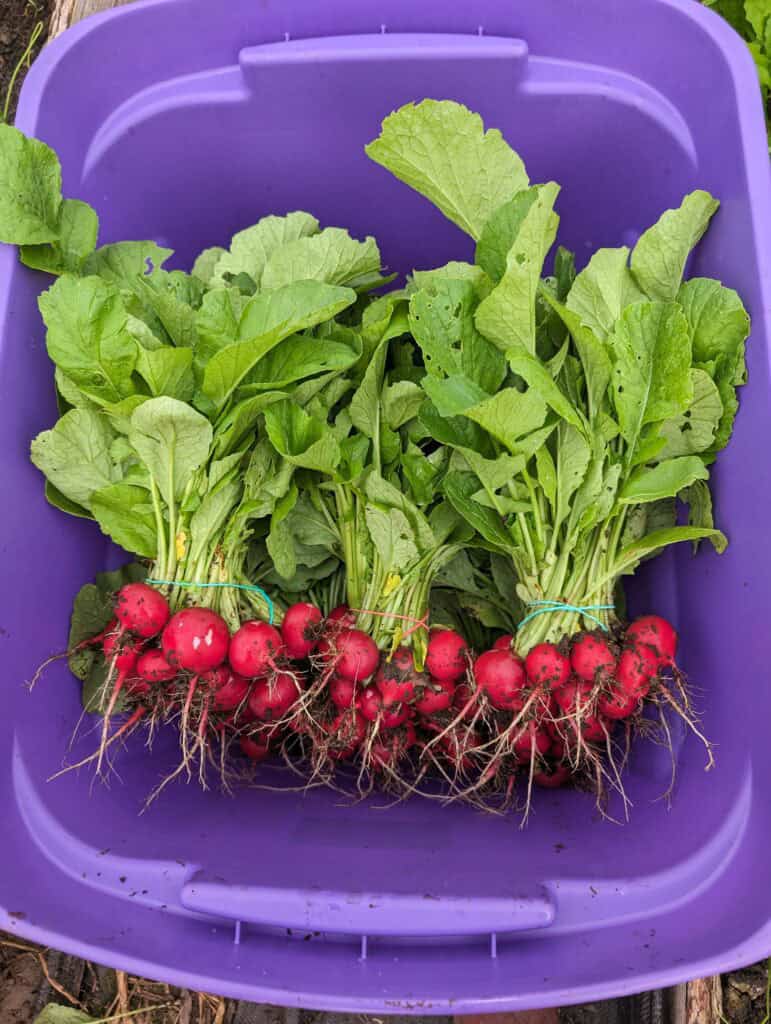
- March to May: These months are for growing cool weather crops like radishes, salad turnips, lettuces, spinach, kales, arugula, and peas.
- June to August: This is the time for our big fruiting crops like beans, tomatoes, peppers, eggplant, cucumbers, and zucchini.
- September to October (until our first frost): We're harvesting summer fruiting crops and a second round of cool weather crops.
- November and December: I use low tunnels that are about 3’ high in the field. They are covered in row cover and greenhouse film. I’m able to keep kale, arugula, spinach, lettuce, radishes, turnips, alive in the field to harvest for the winter market.
The timeline to grow things can shift slightly depending on seasonal changes. This can include late or early frosts and how mild a winter can be.
How do you decide which crops to plant each season?
With 4 years under my belt, I’ve reduced the amount of crops and varieties every season. This makes planning easier. I look at sales data from the farmers market. This helps determine if something should continue to be grown or if it should just be reduced or increased.
I also take notes on what grows well on my farm and what struggles. Some crops are worth trying again, trying with different fertilization/irrigation/etc. and others don’t thrive, so I either eliminate or reduce. I’ve been able to grow lots of brassicas and greens with much success. I’ve leaned heavily into offering various salad mixes at the market. Customers have responded well as a result.
We typically reserve 15% of our available growing space to trial new varieties each year. This helps to keep it exciting and to potentially discover a new great crop to offer.
How does your farm contribute to the local community, whether through farmers' markets, CSA programs, or local restaurants?
We attend a local farmers market every week and we have a CSA program.
The Business Side of Farming
What’s been the most rewarding part of running a local farm? What’s been the toughest?
The most rewarding part has been growing food for folks and then getting to know them through the CSA program or at the farmers market. It’s very humbling to be able to grow food for folks and then to hear how much they enjoy it. The toughest has been the volatility of the weather. Customers, even CSA members, say they understand when a certain crop isn’t available, but it’s hard to not feel like you’re letting them down. Climate change is real and I have witnessed first hand how crops have suffered from too much rain, not enough rain, high temperatures, smoke from Canadian wildfires, early & late frosts. Every single season is a different type of weather experience, but you don’t know what you’ll experience until it’s on your doorstep. You have to prepare for many scenarios.
How do you balance the business side of farming with the hands-on work in the fields?
My “balance” looks like doing as much books, admin, marketing prep in the winter time and then devoting most of my time March through October in the field and doing the hands-on stuff. I still do admin & business side stuff throughout the season as I’m working in the field, but it’s significantly less.
What advice would you give to someone interested in starting a small farm today?
Don’t be afraid to start small. You can always grow in the future. Figure out what works best in the soil you’re growing in and how the soil is impacted by climate change weather events. Don’t be afraid to share your story with folks and behind the scenes - many folks are 1 to 2 generations removed from farming and so they enjoy learning from you.
Connecting with Consumers & the Future of Farming
What do you wish more people knew about farming and where their food comes from?
I wish more people knew that, relatively speaking, farming is a very high risk business. It can come with low profit margins particularly when you are talking about small farms. It's important to consider the many factors that go into farming that include:
- infrastructure,
- land,
- equipment,
- cover crops,
- seeds (especially those certified organic),
- seed starting mix,
- soil amendments,
- trees/root stock, and more.
These are all extremely costly expenses. It typically takes months before any products that are being grown can actually be sold to pay for the farm’s expenses. Next, there is the cost of labor and utilities. This can include water, electric for walk-in coolers, and more that go into growing & harvesting produce. It’s a completely different form of business. And because it is so long before a product can be sold, there is a high risk of the product being destroyed or impacted by pests or extreme weather events. So when I’m charging $4 for a bag of string beans, it’s not because I’m trying to price gouge a potential customer. It’s because that’s what is needed in order for me to stay in business next season.
What's Next for Schul Farmstead?
As with many small, local farms, the best thing consumers can do is buy from them. Schul Farmstead is no exception. This is the number one way you can support small farms. Whether that’s joining the Schul Farmstead CSA or shopping with them regularly at the farmers market or farm store. Aurora also encourages: "If you live in an area like I do where there is more of an off-season for produce farms, then use that time of the year to subscribe to our newsletters, social media accounts, leave us reviews, and tell others about our farm and your experiences. If you can’t buy from us then sharing our information with others is a way to support us."
Aurora is gearing up for the next growing season. She is planting berry bushes this year and some fruit and nut trees. The goal is to add more fruits to the farm and grow them without the use of pesticides, herbicides, and fungicides because there are very few fruit farms that do not spray their fruit crops. While the farm will still be growing vegetables, herbs, and flowers, Aurora is looking forward to having some more perennial crops that do not need to be replanted every season.
Aurora is also hoping to apply for and receive an NRCS grant. This grant will help her build a high tunnel on the farm to extend our growing season. Doing so will mean the farm can include a wider diversity of lettuces, kales, and other greens that can be grown and sold from December to April.
If you're local to Sanborn, NY consider signing up for this incredible farm CSA! Learn more at: www.schulfarmstead.com. Keep connected with Aurora with her newsletter here: https://schulfarmstead.myflodesk.com/letsbefriends
Leave a Reply