
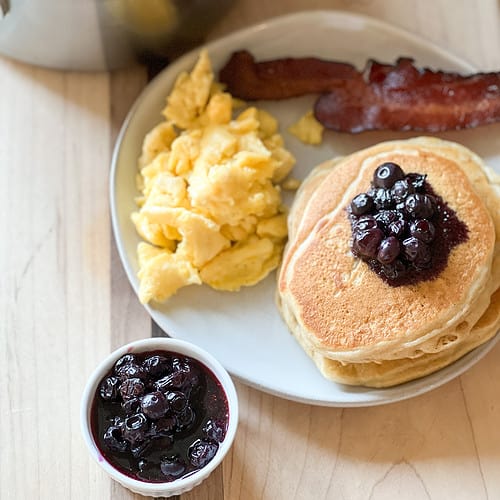
In summer, when the berries are at peak season, I love making this Blueberry Butter Recipe. My recipe uses fresh berries and less sugar as we swap out granulated sugar for maple sugar. If you haven't tried using maple sugar for your freezer jam recipes, keep on reading. This is a great natural sweetener for this low-sugar recipe. Even better, this blueberry butter is freezer-friendly.

This year, I've been working on making homemade jam and fruit preserves. From curds to completes, like this raspberry compote, and refrigerator jams, like this tangerine marmalade. These methods are a great way to "save the season," preserving fruits at their peak, so we can enjoy them throughout the year.
What Makes This Berry Butter So Good
- Great for Fresh or Frozen Berries – Whether you have too many summer blueberries you don't know what to do with them, or grabbing a bag from the freezer, this recipe works beautifully either way.
- Small Batch, Big Flavor – Made with just a few simple ingredients, this blueberry butter cooks down into an intensely fruity spread that's naturally sweet, perfectly thickened, and bursting with real blueberry flavor in every bite.
- Lower in Sugar – Maple sugar makes this homemade fruit spread lower in sugar than other recipes and store brands.
Jump to:
Ingredients
Here is the simple ingredients list to make it:
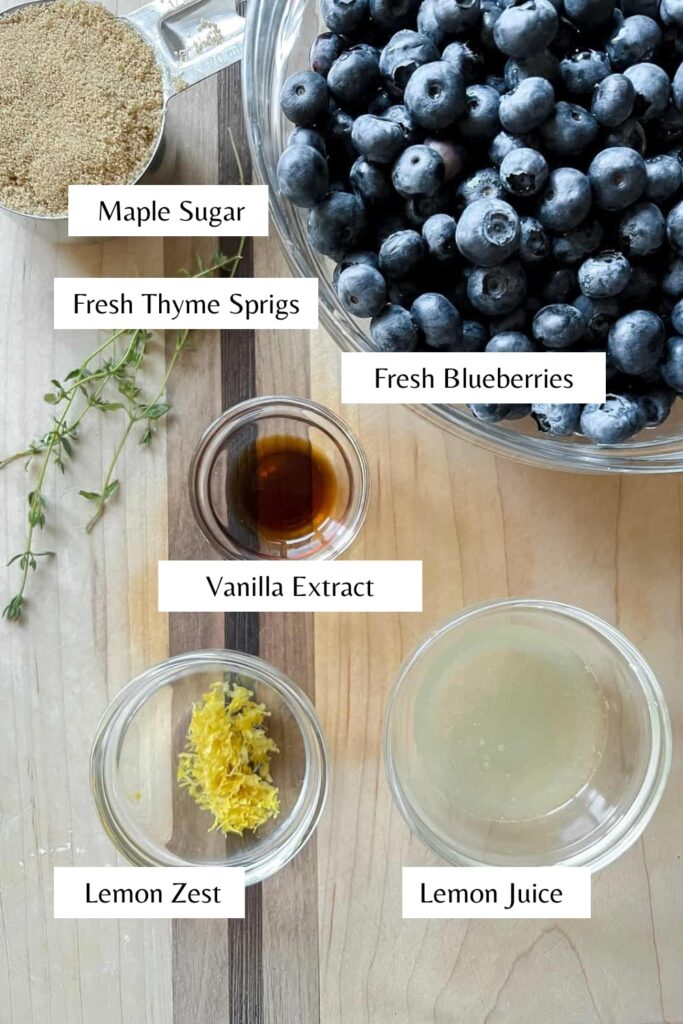
- Blueberries: It wouldn't be Blueberry Butter without it! We can use fresh or frozen. If using frozen berries, allow the berries to thaw before beginning the slow cooking process. We need 2 pounds of fresh berries to make enough to fill 3 half-pint jam jars.
- Maple Sugar: I’ve been loving maple sugar in my fruit jams lately—it’s a great alternative to the heaps of granulated sugar most recipes use (some call for up to 3 cups!). Maple sugar is simply maple syrup that's cooked and crystallized, with no extra processing. It also has a lower glycemic index. This recipe uses just ¾ cup—less than half of what you'd typically find—making it a sweet swap that’s definitely worth it!
- Lemon: We're using lemon juice and zest. The lemon juice contains natural pectin, which thickens the blueberry butter.
- Vanilla Extract: I love the flavor of vanilla in this blueberry butter and opt to use it whenever I can. It adds a lovely sweetness without added sugar.
- Spices and Aromatics: This allows us to customize the flavor in this great recipe. Ground cinnamon and nutmeg add warmth and earthiness to our fruit butter and sprigs of fresh thyme add great depth of flavor to complement the blueberries and lemon. Adding fresh herbs to fresh preserves has become one of my favorite things to do. Just remember to remove the sprigs after cooking the berries down.
Scroll down to the recipe card for the full list of ingredients with the quantities you need of each one.
Variations
- Different Berries: Swap the blueberries for blackberries, raspberries, or strawberries. You can even try a mix of berries. These berries have seeds so you may want to press them through a sieve after cooking for a smoother consistency.
- Blueberry Peach: Replace some of the blueberries with fresh or frozen peaches.
- Try it With Basil: Swap the thyme for basil to make blueberry basil butter.
How to Make Blueberry Butter
To get started, wash and rinse your blueberries. Grab your large heavy-bottomed saucepan and all the ingredients you're going to need. Let's get started. Keep in mind the total cook time is about 3 hours, depending on the heat of your stove and how quickly the blueberries break down during the slow simmer.

Step 1: Start Cooking. Add the cleaned blueberries to your large pot. Heat the blueberries in large pot over low heat.
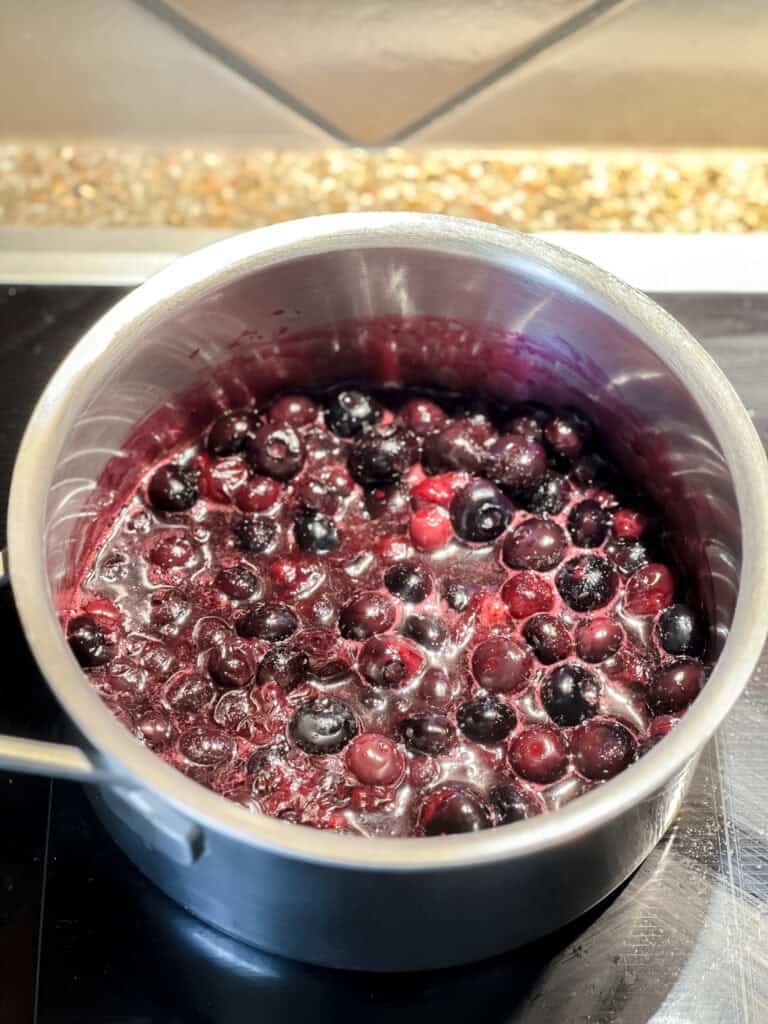
Step 2: Cook First Hour. As the berries cook in the first hour, the skins on the berries will begin to break down and the berries will soften. Give the blueberries a good stir, using the back of the spoon to mash up the blueberries during the slow simmer. Keep covered with the lid slightly ajar to allow steam to escape.
PRO TIP: In the last hour of cooking, you may choose to remove the lid and simmer the mixture uncovered and turn the heat up to a medium-high heat. If you do so, make sure to check the butter every 5 to 10 minutes to ensure it’s not scorching on the bottom of the pot.
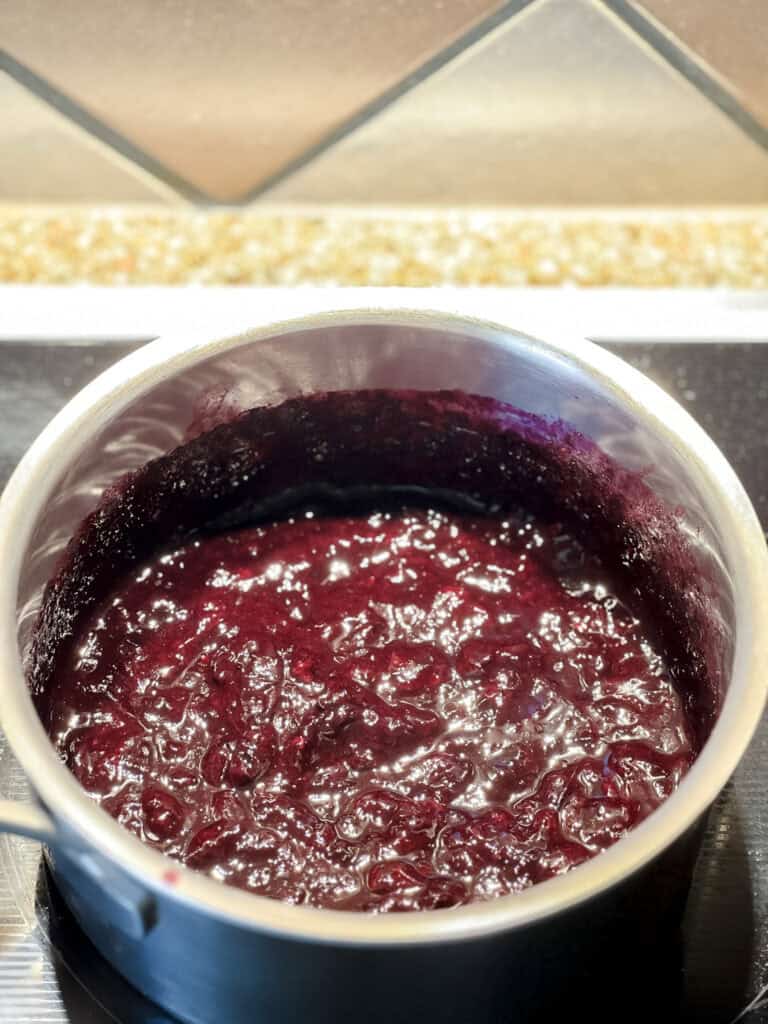
Step 3: Keep Simmering. Allow the berries to simmer for another hour, stirring every 30 minutes with the back of a wooden spoon to keep breaking up the blueberries. It will begin to look like a very thickened purée and should begin to look like it can be spreadable. In the final 30 to 45 minutes of cooking, add the sugar, lemon zest and juice, vanilla extract, cinnamon, nutmeg, and thyme. Cook to reduce the mixture down and allow any remaining liquids to evaporate. Keep stirring the butter every 10 minutes or so to prevent sticking and scorching.
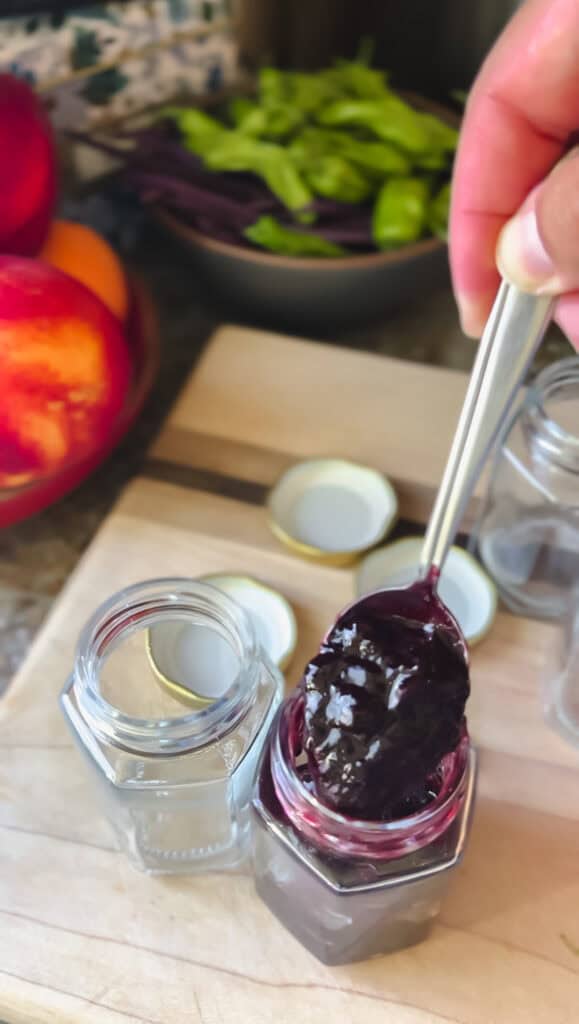
Step 4: Serve or Transfer to Jars. Use a funnel to transfer the butter from the pot to the prepared jars. Wipe the rims, leaving about ½ inch of space near the top of the jar, and add the lids and rings. If serving right away, it's delicious with freshly baked buttermilk scones and clotted cream for afternoon tea or morning breakfast.
PRO TIP: I recommend sterilizing your jars and lids before adding the butter. This will aid in extending the shelf-life. To do this, prepare a boiling water bath in a separate large pot and sterilize three half-pint jars.
Expert Tips
- Allow time. Making blueberry butter is going to take some time. I find the entire process takes about three hours, depending on how long it takes for the blueberries to break down during cooking. While you don't need to watch it for the full time, it does require regular checking.
- Consistency. For a smoother texture, you will want to blend or process the blueberry butter once it's cooked. Transfer it to a blender or use an immersion blender in the pot. You can also skip this step if you want a butter with a bit more texture.
- Use a heavy-bottom pot. Fruit butters cook best in a heavy-bottomed saucepan. A minimum 3-quart wide diameter stainless steel saucepan or a 4-quart dutch oven will also work.
- Avoid scorching. Don't leave the blueberry on its own for extended periods of time. You will need to monitor it to make sure it doesn't burn.
Recipe FAQs
Yes, the slow cooker works great. Cook the ingredients in your slow cooker for 1-2 hours on low heat to allow the berries to break down. Then continue to cook and stir occasionally for another 3-4 hours, or until the fruit has broken down to a smoother consistency. Once you get it to the right consistency, you can blend and then store as directed.
Cook slowly at a simmer rather than high heat. As it cooks, the juices evaporate and the pectin in the lemon both work to thicken the fruit butter.
Absolutely! While I advocate for cooking with fresh whenever possible, you can use frozen berries when fresh aren't available. This means you can also make a batch when blueberries aren't in season. If using frozen berries, allow the berries to thaw before beginning the slow cooking process.
Store your homemade blueberry butter in the refrigerator for 4-6 weeks. For longer storage, place them in the freezer for up to six months. Thaw them overnight in the refrigerator before serving.
This recipe is not a canning recipe, so it's not suitable for storing at room temperature. The step of boiling the jars ensures that our freezer-safe jars have been sterilized before and after filling them which may extend their shelf-life under refrigeration. If you want to can your blueberry butter you will need to actually follow the instructions for canning by water bath which is explained in this article by Alphafoodie.

Serving Suggestions
This blueberry butter has no doubt become a favorite. It's also shown me ways to make traditional jam recipes where we no longer need to purchase store-bought jams! Here are some ways to enjoy the fruits of your labor after making this delicious blueberry butter:
- Swirl a dollop of blueberry butter into plain Greek yogurt. Top with some steel cut oat granola and seasonal fruit. The best part: you don't need much sugar!
- Spoon a couple teaspoons of blueberry butter onto a scoop of homemade vanilla bean ice cream.
- Serve small bowls of blueberry butter with other fruit spreads like this homemade fig jam as part of a cheese platter or charcuterie board. These are great served on crackers with a bit of brie!
- Add a dollop of the fruit butter to a piping hot bowl of breakfast oatmeal.
The good news? Once you've made this blueberry butter you'll have the confidence to try making other varieties and even create your own favorite homemade freezer jam. These simple steps will help you craft a fruit spread that you'll enjoy for a long time until we yearn for berry season once more.
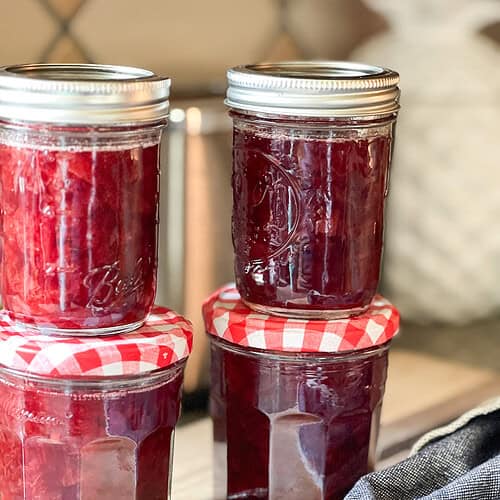
More Spreads and Jams Recipes to Try


If you make this, please let me know how it went in the comments or tag me on social media! Tag me on Instagram or on my Facebook page. Cheers to the next nourishing meal. 🧡

Blueberry Butter Recipe (Freezer Friendly)

Equipment
- 1 Set of jar funnel and lifters (See links in post for link to the kit I recommend)
- 1 3-quart stainless steel saucepan (You can also use a 4-quart dutch oven)
- 3 half-pint glass mason jars
Ingredients
- 2 pounds blueberries
- ¾ cup maple sugar
- 1 tablespoon lemon juice
- 1 teaspoon lemon zest
- ½ teaspoon vanilla extract
- 1 teaspoon ground cinnamon
- Pinch of grated nutmeg
- 4-6 sprigs of fresh thyme
Instructions
- Wash and rinse blueberries. Place blueberries in a 4-quart dutch oven or large stainless steel saucepan and turn heat to low. Allow the blueberries to simmer on low for an hour. The skins on the berries will begin to break down and the berries will soften. Give the blueberries a good stir, using the back of the spoon to mash up the blueberries during the slow simmer. Keep covered with the lid slightly ajar to allow steam to escape.
- Allow the berries to simmer for another hour. Check every 30 minutes to give it another stir, using the back of a wooden spoon to keep breaking up the blueberries. Alternatively, a potato masher may also be used to mash the berries. The goal of the slow simmer is to allow the blueberries to break down and become as thick as possible. It will begin to look like a thick ketchup and should be spreadable.
- In the final 30 to 45 minutes of simmer the blueberries, add the maple sugar, lemon zest and juice, vanilla extract, cinnamon, nutmeg, and thyme. Now, you want to reduce the mixture down and allow any remaining liquids to evaporate. You may choose to remove the lid and simmer the mixture uncovered and turn the heat up to a medium-high heat. If you do so, make sure to check the butter every 5 to 10 minutes to ensure it’s not scorching on the bottom of the pot. Keep stirring the butter every 10 minutes or so to prevent sticking and scorching.
- The total cook time is about 3 hours depending on the heat of your stove and how quickly the blueberries break down during the slow simmer. When the butter is nearing completion, prepare a boiling water bath in a separate large pot and three half-pint jars.
- If you want a smoother butter, you can use an immersion blender to purée until smooth. Otherwise, funnel the butter into the prepared jars. Wipe the rims, leaving about ½ headspace near the top of the jar, apply the lids and rings. Process in a boiling water water for 10 minutes. Remove carefully and allow to cool to room temperature before storing.
Notes
- Allow time: Blueberry butter takes time—plan for about 3 hours total, depending on how quickly the berries break down. It doesn’t need a constant eye, but you’ll want to check in regularly.
- Consistency: For a smoother butter, blend it after cooking with an immersion blender or transfer to a blender. Or skip it if you like a bit more texture.
- Use a heavy-bottomed pot: A wide, heavy-bottomed saucepan (at least 3 quarts) or a 4-quart Dutch oven works best for even cooking.
- Avoid scorching: Don’t leave it unattended too long—occasional stirring helps prevent burning.


Leave a Reply